

Choosing the Right Pump for Fuel & Lubrication Handling
When it comes to moving hydrocarbon-based fluids such as diesel, lubricants and oils, efficiency is always the goal. But it shouldn’t come at the expense of reliability, product quality or the environment. Choosing the right pump isn’t simply about getting fluid from one place to another. It’s about ensuring the entire process is economical, safe and fit for purpose.
Fluid pumping has come a long way since the days of the ancient Egyptians. Thankfully, we’ve moved beyond relying on manpower to haul water uphill. Modern pumping systems are driven by electric motors, compressed air and sophisticated engineering that have transformed what was once a simple task into a highly specialised field.
It’s not just motors that have evolved. Major advances in sealing technology, friction materials, wear-resistant components and internal flow path design have resulted in pumps that are purpose-built for specific applications. And that’s exactly the point.
There is no universal pump that excels at everything.
Every application has its own challenges, whether you’re transferring diesel, waste oil, engine oil, hydraulic fluid or grease. That’s why selecting the correct pump from the outset is one of the most important decisions you’ll make. A well-matched pump will improve productivity, reduce maintenance costs and help protect both your equipment and the fluids you’re handling.
Start with Industry Best Practice
Whenever someone asks me which pump they should buy, my first answer is usually… it depends.
Not exactly groundbreaking advice, I know.
The best place to start is by looking at what has already proven successful within your industry. Decades of experience, continuous product development and plenty of trial and error have established best practices for transferring different fluids under different operating conditions. Those recommendations generally strike the right balance between performance, reliability, maintenance requirements and overall operating costs.
The next thing most people look at is price.
Like many consumers, I’ve often believed there’s at least some truth to the saying, “You get what you pay for.” But after more than 20 years in the fluid handling industry, I’ve also learnt that price doesn’t always tell the whole story. I’ve seen plenty of underdogs hold their own against the big-name brands. Sure, there are some horses that probably shouldn’t be on the track, but the million-dollar stallion is often not much quicker across the finish line than the half-price pony.
The trick isn’t buying the most expensive pump. It’s buying the right pump.
Over the years we’ve seen enough installations, breakdowns and success stories to spot a few recurring themes. Regardless of the industry, the same challenges tend to surface time and time again.
The Biggest Challenges in Fluid Handling
If fluid handling had a list of repeat offenders, contamination would be sitting comfortably at the top.
Whether it’s dirt, moisture, microbial growth or other foreign particles, contamination can dramatically reduce lubricant performance and accelerate wear throughout an entire system.
One of the biggest contributors is poor sealing. Even leaks too small to notice can allow moisture and airborne contaminants to enter tanks and fluid systems. Over time this promotes oxidation, encourages bacterial growth, degrades the lubricant itself and may even lead to internal corrosion.
Then there’s the challenge of handling fluids with very different characteristics.
Not all fluids behave the same. Diesel flows very differently to gear oil, hydraulic oil behaves differently to grease, and every product has its own viscosity and density. Getting each fluid to move where you want it, at the required pressure and flow rate, without damaging the fluid itself, requires the right combination of pump technology and operating conditions.
Viscosity simply refers to how easily a fluid flows. Low-viscosity fluids such as diesel move readily, while thicker lubricants require more force and often a different style of pump altogether. Density, on the other hand, refers to how much mass is packed into a given volume of fluid.
Understanding these properties is essential because selecting the wrong pump can result in poor performance, excessive wear, unnecessary energy consumption and shortened equipment life.
Why Operating Conditions Matter
Choosing the correct pump is only part of the equation. The environment in which it operates is just as important. Temperature, for example, has a significant impact on fluid performance. At low temperatures, some lubricants become so viscous that they barely flow at all. At higher temperatures, lubricants oxidise more rapidly, additives break down faster and wear protection begins to decline. The end result is reduced efficiency and increased equipment wear.
Location also plays an important role.
Imagine manually lubricating dozens of bearings on a continuously operating production line using nothing more than a grease gun whenever someone happens to have a spare moment. Apart from being incredibly time-consuming, inconsistent lubrication can lead to over-greasing, under-greasing and contamination.
Conversely, fitting an expensive automatic lubrication system to equipment that’s only used occasionally in a small workshop may be unnecessary. In those situations, manual lubrication often remains the most practical and cost-effective solution. As with pump selection itself, the best answer depends entirely on the application.
Choosing the Right Pump
| Pump Type | Best For | Power Source |
|---|---|---|
| Electric Pump | Diesel, oil & lubricant transfer in fixed installations | Electricity |
| Pneumatic Pump | Hazardous areas, mobile applications | Compressed air |
| Double Diaphragm Pump | Waste oil, chemicals, high-viscosity fluids | Compressed air |
| Rotary Drum Pump | Oil drums & workshop dispensing | Manual |
| Grease Gun | Routine lubrication | Manual |
By now you’ve probably realised there isn’t a universal answer to pump selection. Every application has its own demands, and choosing the right pump comes down to understanding your operating environment, the type of fluid you’re handling, and what you expect the pump to deliver.
Whether you’re transferring diesel between storage tanks, dispensing lubricants in a workshop or moving waste oil from collection points, matching the pump to the application will always produce better results than trying to make a “one-size-fits-all” solution work.
Let’s look at some of the most common pump options.
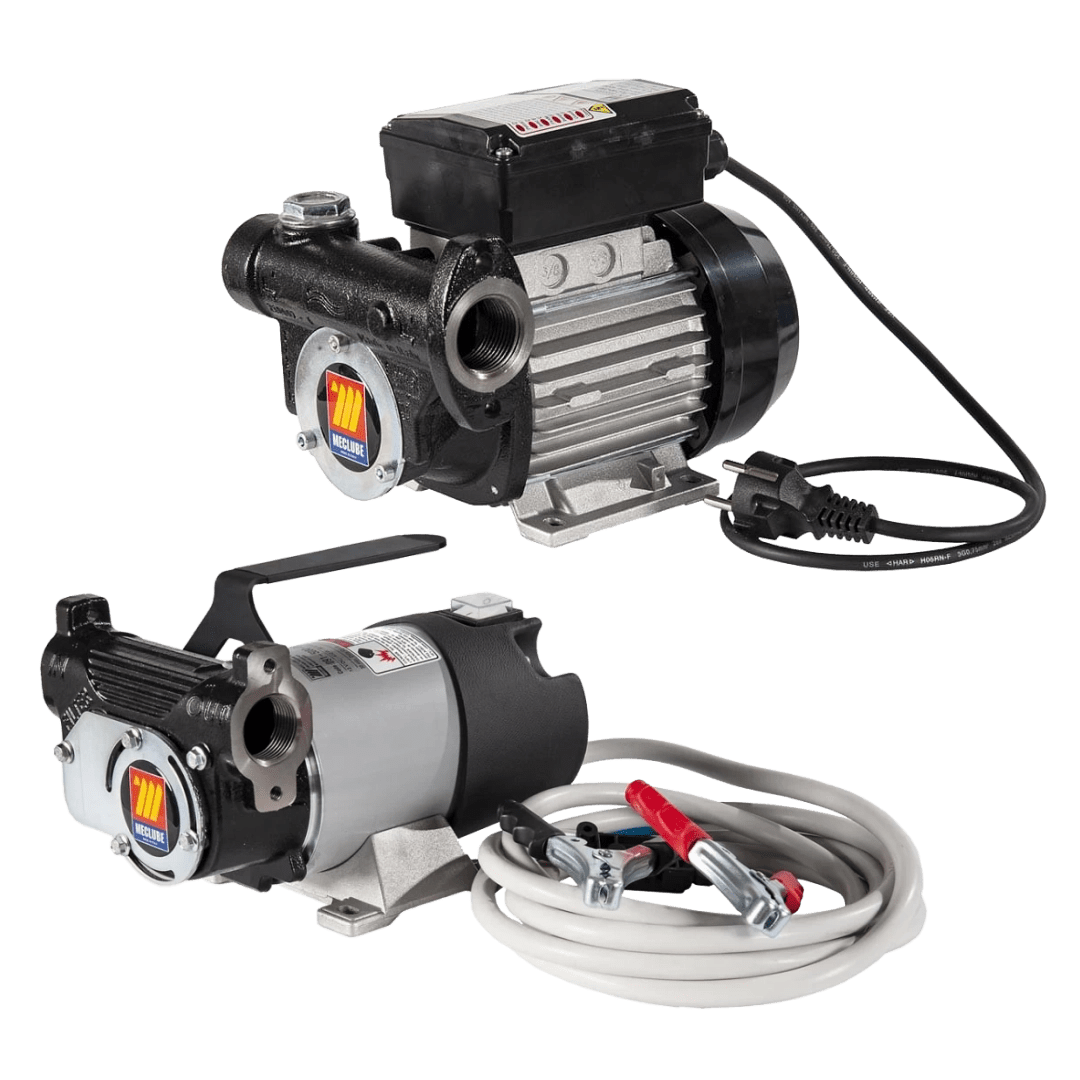
Electric Pumps
Where electricity is readily available, electric transfer pumps are often the first choice.
They’re efficient, relatively quiet and require less routine maintenance than diesel-driven alternatives. They also integrate easily with modern control systems, allowing for automation, flow monitoring and precise dispensing. For operations where fluid transfer forms part of a daily routine, electric pumps often provide the lowest long-term operating costs.
They’re particularly well suited to transferring diesel, hydraulic oil and other lubricants in fixed installations where reliable power is available.

Pneumatic Pumps
Of course, electricity isn’t always an option.
Remote sites, hazardous environments and mobile applications often call for a different approach, which is where pneumatic pumps come into their own.
Powered by compressed air, these pumps eliminate the need for electrical motors near potentially flammable liquids, making them an excellent choice for many industrial environments. As long as your compressor is properly maintained and fitted with suitable filtration and pressure regulation, pneumatic systems can provide years of dependable service.
One of the biggest advantages is their versatility. Pneumatic pumps perform exceptionally well across a wide range of fluids and operating conditions while remaining relatively simple to maintain.
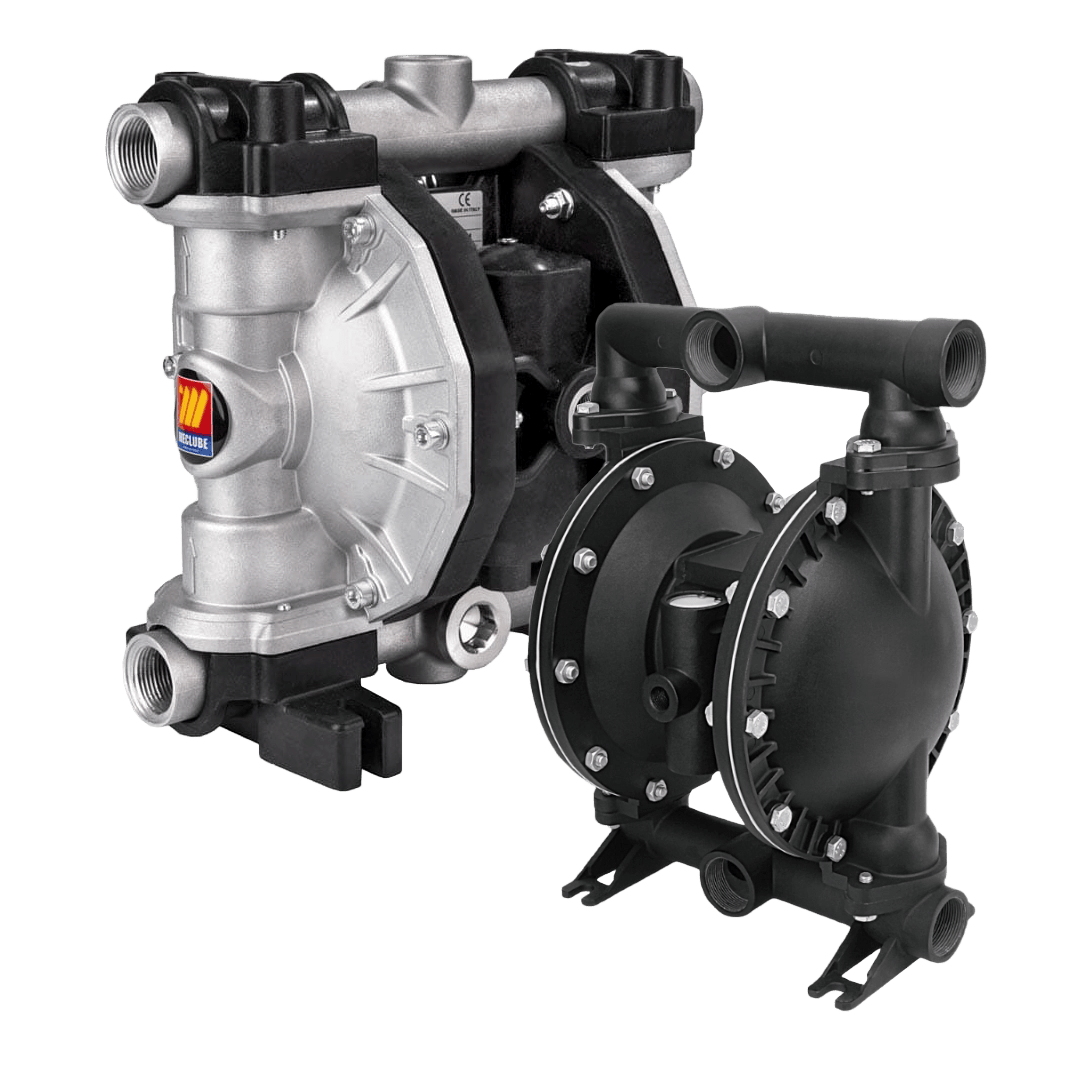
Pneumatic Double Diaphragm Pumps
If there were a Swiss Army knife of industrial pumps, the pneumatic double diaphragm pump would certainly be a contender.
Using positive displacement technology, these pumps deliver a consistent flow rate while comfortably handling fluids that would challenge many other pump designs. Thick lubricants, waste oil, chemicals and even corrosive products can all be transferred with remarkable efficiency.
Another significant advantage is the pump’s design. Unlike centrifugal pumps, there are no impellers spinning through the fluid. This makes diaphragm pumps particularly well suited to handling abrasive, viscous or shear-sensitive products, as well as volatile liquids where safety is a major consideration.
It’s no surprise they’ve become a favourite across mining, manufacturing, workshops and countless industrial applications.
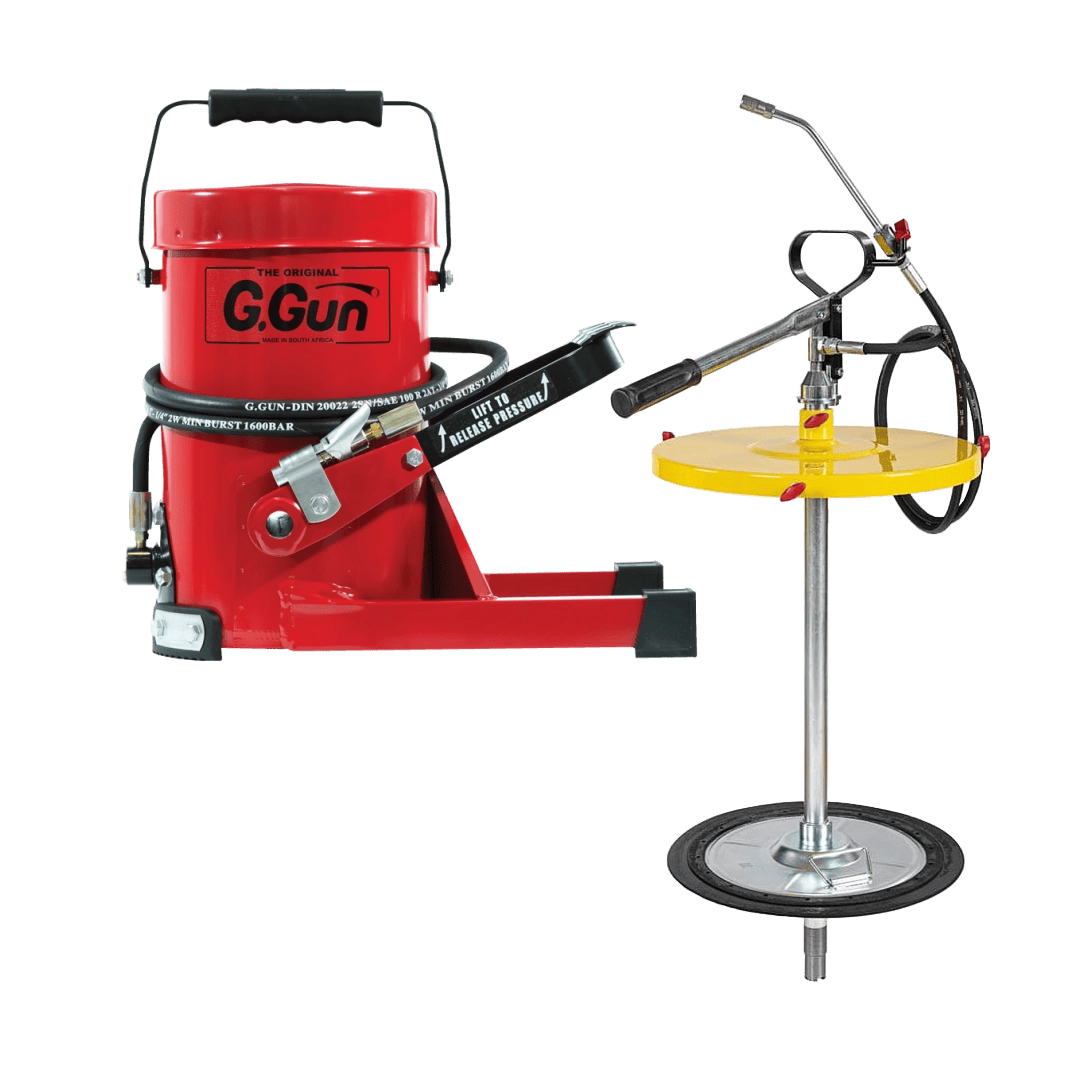
When Manual Pumps Still Make Sense
With so much automation available today, it’s easy to assume manual pumps have become obsolete.
They haven’t.
In fact, manual lubrication remains one of the most practical solutions for many maintenance tasks.
If you’re only dispensing small volumes of oil or grease occasionally, investing in powered equipment often isn’t necessary. A quality manual pump is affordable, reliable and requires very little maintenance.
Hand-operated grease pumps and foot-operated grease units remain workshop favourites because they combine portability with generous grease capacity. They’re ideal for servicing multiple machines without needing compressed air or electrical power.
Similarly, rotary drum pumps provide a simple and dependable method for dispensing oil directly from drums. Sometimes a few turns of the handle really are all that’s required.
For smaller lubrication jobs, handheld grease guns continue to earn their place in every maintenance workshop. They’re lightweight, portable and perfect for quick servicing without unnecessary setup time.
Technology has certainly advanced, but there are still plenty of situations where simplicity wins.
Quick Pump Selection Checklist
Before investing in a new pump, take a few minutes to answer these key questions. Choosing the right equipment from the start can improve efficiency, reduce maintenance costs and extend the life of both your pump and the fluids you’re handling.
- What fluid am I transferring? Diesel, hydraulic oil, engine oil, grease and waste oil all have different characteristics and may require different pump technologies.
- What is the fluid’s viscosity? The thicker the fluid, the more important it becomes to select a pump designed to handle higher viscosities efficiently.
- How much flow do I need? Consider both the required flow rate and operating pressure to ensure the pump can meet your application’s demands.
- What power source is available? Is electricity readily available, would compressed air be more practical, or is a manual pump the better option?
- Where will the pump be used? Workshop environments, fixed installations, remote sites and hazardous locations all have different requirements.
- How often will the pump be used? Occasional use may only require a manual pump, while frequent or continuous operation often justifies an electric or pneumatic solution.
- How important is contamination control? If you’re handling lubricants destined for sensitive machinery, proper sealing, filtration and compatible equipment are essential.
Answering these questions before making a purchase will help you narrow down the most suitable pump for your application and avoid costly mistakes later on.
What Happens If You Choose the Wrong Pump?
The consequences can range from mildly inconvenient to extremely expensive.
An undersized pump may struggle to achieve the required flow rate. An oversized pump can waste energy, generate unnecessary heat and shorten the life of both the pump and the fluid. Choosing equipment that’s incompatible with the viscosity of your product can lead to poor performance, excessive wear and premature failure.
Then there’s contamination, one of the biggest hidden costs in fluid handling. A poorly designed or poorly maintained transfer system can introduce dirt, moisture and air into lubricants, reducing their effectiveness long before they ever reach the equipment they’re meant to protect.
Simply put, the wrong pump often costs far more than the right one.
Fortunately, selecting the correct equipment is much easier than it used to be. Manufacturers provide detailed specifications, industry best practices are well established, and experienced suppliers can help match the right pump to your application.
A little research at the beginning of a project can save countless hours of frustration later.
Don’t Forget Maintenance
Choosing the right pump is only half the battle.
Even the best equipment won’t perform as expected if it’s neglected.
Routine inspections, replacing worn seals, checking hoses and fittings, servicing filters and following a preventative maintenance schedule all play a crucial role in keeping fluid transfer systems operating efficiently.
Think of it this way: buying a premium pump and never maintaining it is a bit like buying a luxury 4×4 and never changing the oil. It may look impressive parked in the workshop, but eventually it’ll let you down when you need it most.
A well-maintained pump doesn’t just last longer. It performs more efficiently, protects the fluids it’s transferring and helps reduce costly downtime.
Final Thoughts
There isn’t a “best” pump.
There is only the best pump for your application.
By considering factors such as fluid type, viscosity, operating conditions, contamination risks and maintenance requirements, you’ll be in a far better position to select equipment that delivers reliable performance for years to come.
Whether that turns out to be an electric transfer pump, a pneumatic diaphragm pump or a humble manual grease gun, the goal remains the same: move the right fluid, at the right flow rate, using the right equipment.
After that, the hard part is over.
Well… almost.
You’ll still need to dust off the maintenance schedule, grab your overalls and pay your pumps the attention they deserve. Because no matter how much you’ve invested in your fluid handling equipment, it’ll only ever perform as well as it’s maintained.
Look after your pumps, and they’ll return the favour.


